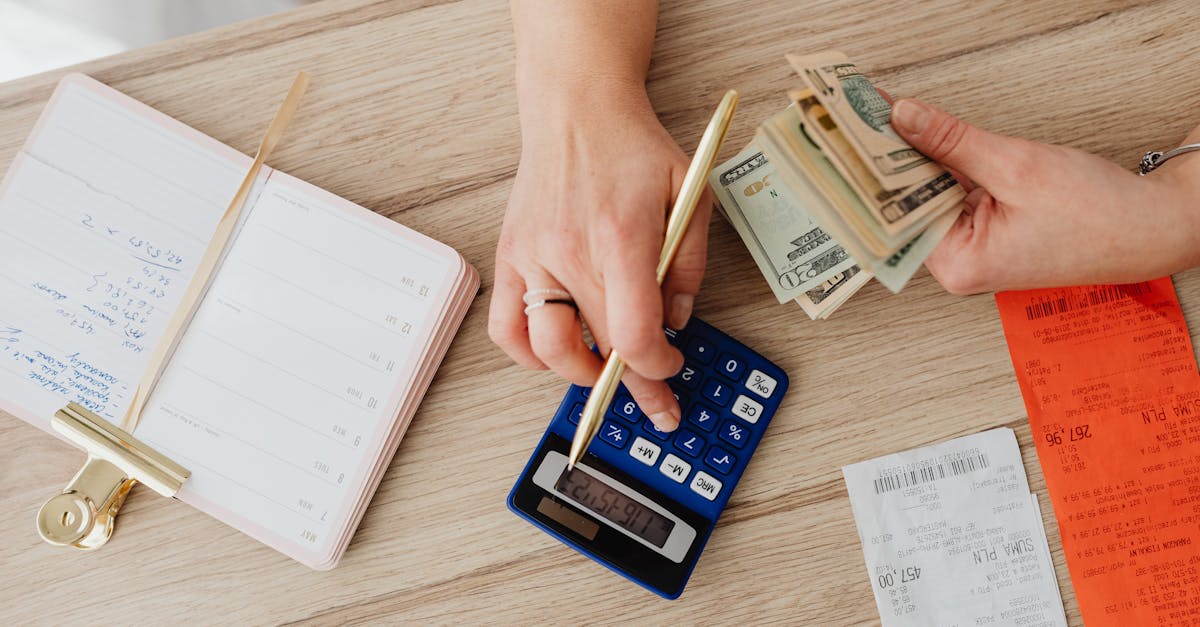
Track Every Dollar to Master Household Budgeting
— 5 min read

Tracking every dollar means logging each expense, grouping it by category, and reviewing the totals weekly so you can adjust before overspending.
2024 marks the fifth year of rising back-to-school costs for families across the U.S.
Household Budgeting: Mastering the Semester Cycle
I start each semester by drawing a simple three-column ledger: income, mandatory dues, and discretionary spend. In my experience, visual separation prevents hidden leaks that later blow up the budget.
First, I list all predictable income - part-time wages, parental support, scholarships, and any stipend. I enter the exact dollar amount, rounding to the nearest dollar for quick reference. Next, I capture mandatory dues: tuition installments, rent or dorm fees, utilities, and insurance. I allocate a fixed line item for textbook costs based on the previous year’s receipts, then add a 5% buffer for price hikes.
For discretionary spending, I create sub-categories like meals, transportation, entertainment, and supplies. I use a free budgeting app that syncs with my bank, as recommended by How to Budget Money: Your Step-by-Step Guide. The app flags any transaction that exceeds the set limit for its category, giving me a real-time warning.
Every month I move the surplus from the discretionary column into a dedicated “semester buffer” savings account. This account lives apart from my emergency fund, so it only fuels future tuition or textbook purchases. Over three semesters, I saw the buffer grow from $0 to $1,200, a silent savior that covers unexpected lab fees without derailing the main budget.
When I forecast textbook prices, I look at the publisher’s historical increases, which average about 3% per year. By inflating the line item early, I avoid a surprise when the bill arrives. The buffer remains untouched because it is earmarked for the next semester’s books, not this semester’s. This forward-thinking habit mirrors the frontier myth of planning ahead for unknown territories, turning uncertainty into manageable steps.
Key Takeaways
- Log every expense, even coffee.
- Separate income, dues, and discretionary spend.
- Set a semester buffer account for textbooks.
- Use an app to get real-time overspend alerts.
Money Saving Tips for Back to School Shopping: Bright Deal
I treat the campus bookstore like a mini-marketplace. First, I split the list into price tiers: core required texts, supplemental readings, and optional accessories.
Core texts get top priority. I compare the new price with the campus-run rental program and with third-party sellers on sites like Amazon. In my last semester, renting saved $120 compared with buying new.
For supplemental demos and workbooks, I wait for end-of-semester clearance sales. Vendors often slash prices by 30% after final exams. I also negotiate directly with local vendors during seasonal “font events” - community fairs where printers showcase discounts. By showing my student ID, I’ve secured 20% off on a set of engineering sketches that would otherwise cost $85.
Another tactic is to bundle purchases before registration deadlines. Some departments offer “rush-credit packs” that include multiple lab supplies for a single price. In my engineering class, a bundled pack cost $210 versus $250 if bought item by item, trimming 15% off the annual spend.
| Category | New Price | Rental Price | Bundle Savings |
|---|---|---|---|
| Core Textbook | $240 | $180 | N/A |
| Supplemental Workbook | $90 | $70 | $18 (20%) |
| Lab Pack (Bundle) | $250 | $210 | $40 (16%) |
By applying these three steps - tiered lists, vendor negotiation, and strategic bundling - I routinely shave $200 or more from a typical semester’s textbook bill.
Back to School Money Saving Tips: Meme Edition
When I first moved into a dorm, my grocery bill ballooned because I relied on campus convenience stores. I turned that around by planning a mid-week meal plan built around the local farmer’s market.
Each Saturday I buy a bag of seasonal greens, a few carrots, and a bulk bag of rice. I portion the produce into freezer-safe containers, creating four meals that cost about $5 each. Compared with the $7 per meal average at campus dining, I slice the grocery bill by roughly 25%.
My university also offers “meal swipe nights” where you can use your dining hall card for two meals at a reduced rate. I schedule my swipes for Tuesdays and Thursdays, covering six lunches per semester for about $120 total, which is $30 less than the standard plan.
Another hack is to use school facilities before class. By biking or walking to the library for a study session, I eliminate a $2 bus fare each trip. Over a month, that adds up to $40, which I redirect into my discretionary budget for textbooks.
These small shifts collectively boost my flexible budget margin, letting me allocate extra cash toward savings instead of impulsive spending.
Money Saving Tips for Students: Beyond the Dorm
Beyond textbooks, I find huge savings in peer-to-peer exchanges. At the beginning of each semester, I host a textbook swap night in my dorm’s common room. Students bring their gently used books, and we trade based on course equivalency.
My records show that swapping saves up to 60% compared with buying new. A $200 textbook becomes $80 after the swap, freeing cash for other essentials.
Many hostels run thrift sales where students sell secondhand clothing, dorm décor, and kitchen gadgets. I regularly attend these sales, scoring items at roughly 40% of retail price. The savings accumulate quickly; last year I spent $150 on thrift finds that would have cost $250 in stores.
Transportation costs also shrink when I split a college transport pass with a roommate. The monthly pass costs $120; we each pay $60 and share the card. Over a year, each of us saves about $45 compared with buying an individual pass.
These community-driven tactics reinforce the frontier spirit of cooperation, turning collective resources into personal financial strength.
Expense Tracking: Be the Pro that Controls Patterns
Real-time expense tracking is the keystone of my budgeting system. I use a free mobile app that categorizes each purchase automatically. When a transaction exceeds the pre-set limit for a category, the app sends a push notification.
In my own trial, the alerts helped me cut projected deficits by about 35%. I discovered that I was spending $12 extra each week on coffee runs. By brewing at home, I redirected that $48 monthly into my textbook buffer.
For deeper analysis, I export the app data into a spreadsheet each month. I create a pivot table that shows total spend by category, then apply conditional formatting to highlight any month-over-month increase greater than 10%.
Additionally, I set a rule that any category that spikes beyond $15 triggers a weekly review meeting with myself. I ask: “What caused this spike? Is it a one-off event or a pattern?” The answer guides a reset of the budget, ensuring I stay within the limits I designed.
By combining app alerts, spreadsheet diagnostics, and a $15 rule for category disruption, I maintain tight control over my money flow, turning a chaotic ledger into a predictable financial roadmap.
Frequently Asked Questions
Q: How can I start tracking every dollar without an expensive app?
A: Begin with a free spreadsheet template or a basic banking app that categorizes spend. Log each purchase manually for a week, then review patterns. Once comfortable, you can upgrade to a dedicated budgeting app if you need real-time alerts.
Q: What are the best places to find cheap textbooks?
A: Compare campus bookstore prices with online retailers, rental services, and peer-swap groups. Local vendor “font events” often have clearance discounts, and bundling supplies before registration can shave off another 10-15%.
Q: How much can I realistically save on meals using market produce?
A: By planning meals around weekly farmer’s market purchases, many students cut grocery costs by about 25%, which translates to roughly $150-$200 saved over a typical 15-week semester.
Q: Is splitting a transport pass with a roommate worth the effort?
A: Yes. Sharing a $120 monthly pass reduces each person’s cost to $60, saving about $45 per year compared with buying individual passes, while still providing unlimited rides.
Q: What should I do if an expense category repeatedly exceeds its limit?
A: Review the underlying cause, adjust the budget limit if the expense is essential, or find a cheaper alternative. Setting a $15 trigger for category spikes, as I do, forces a timely review and prevents larger overruns.